A normal circuit
Current flows from the battery positive through the fuse, the switch and the load (lamp, motor, injector), and returns to ground. The switch decides when the load works.
Short to ground
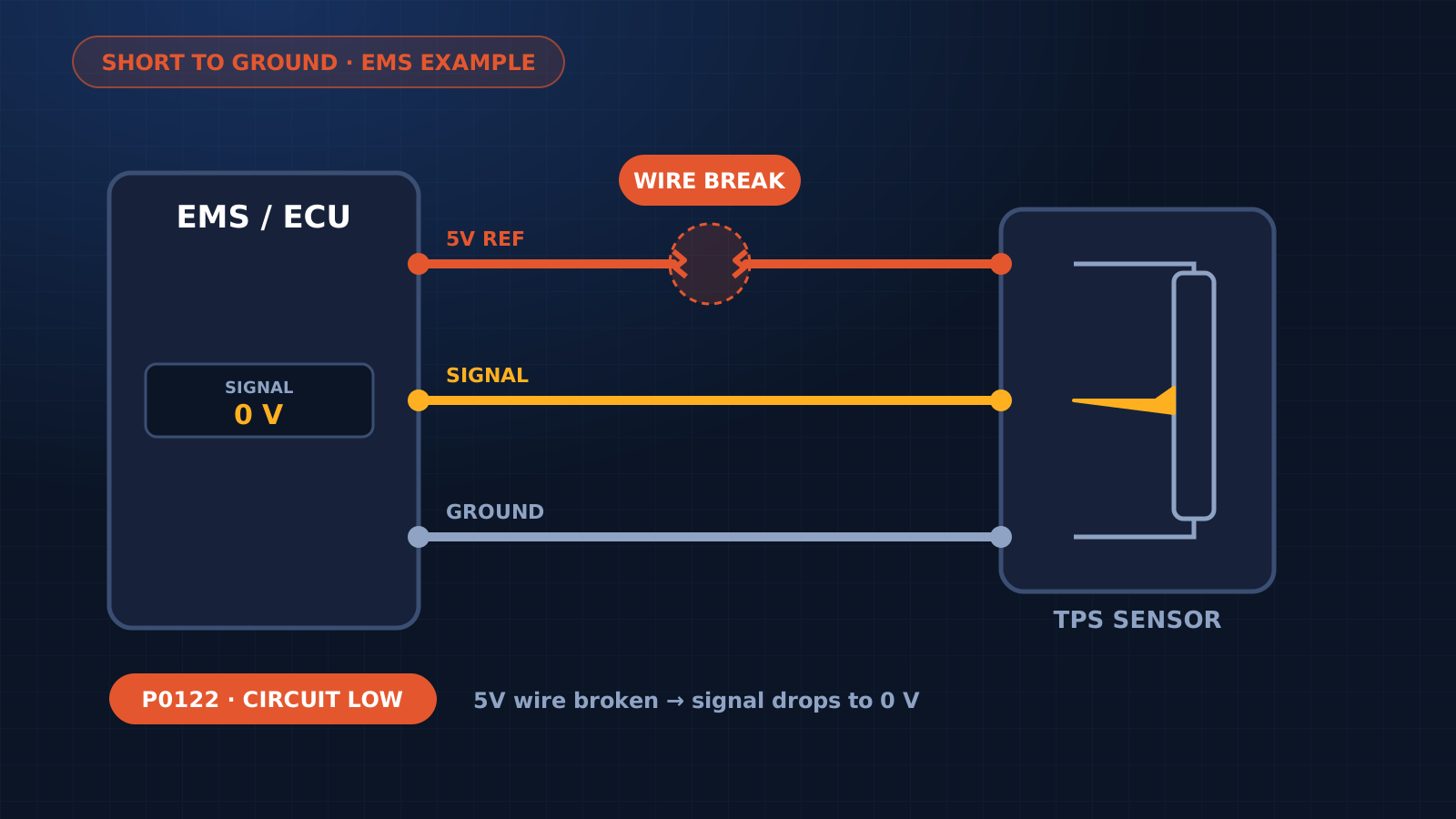
A short to ground happens when a positive wire touches the body or any ground point before it reaches the load, usually where the insulation has rubbed through. Current bypasses the load, resistance drops to almost zero and a very high current flows.
- The fuse blows again and again, often as soon as the switch is turned on.
- The load does not work.
- Without a fuse, the wire can overheat and burn.
Short to positive
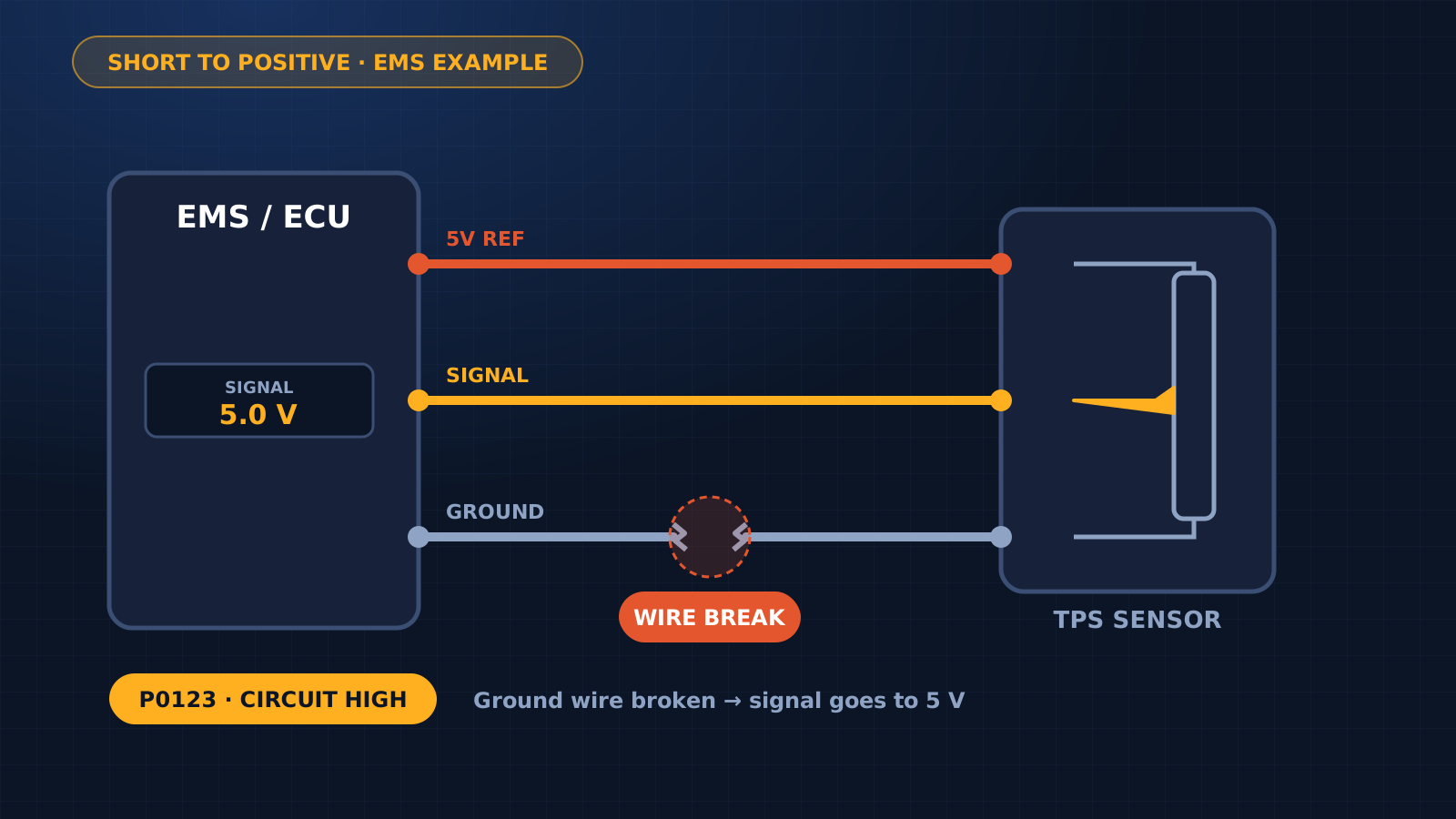
A short to positive happens when a wire that should be switched or grounded touches another live 12 V wire. The load now gets power from the wrong wire.
- The load stays ON even with the switch OFF, or works with the wrong switch.
- The fuse usually does not blow.
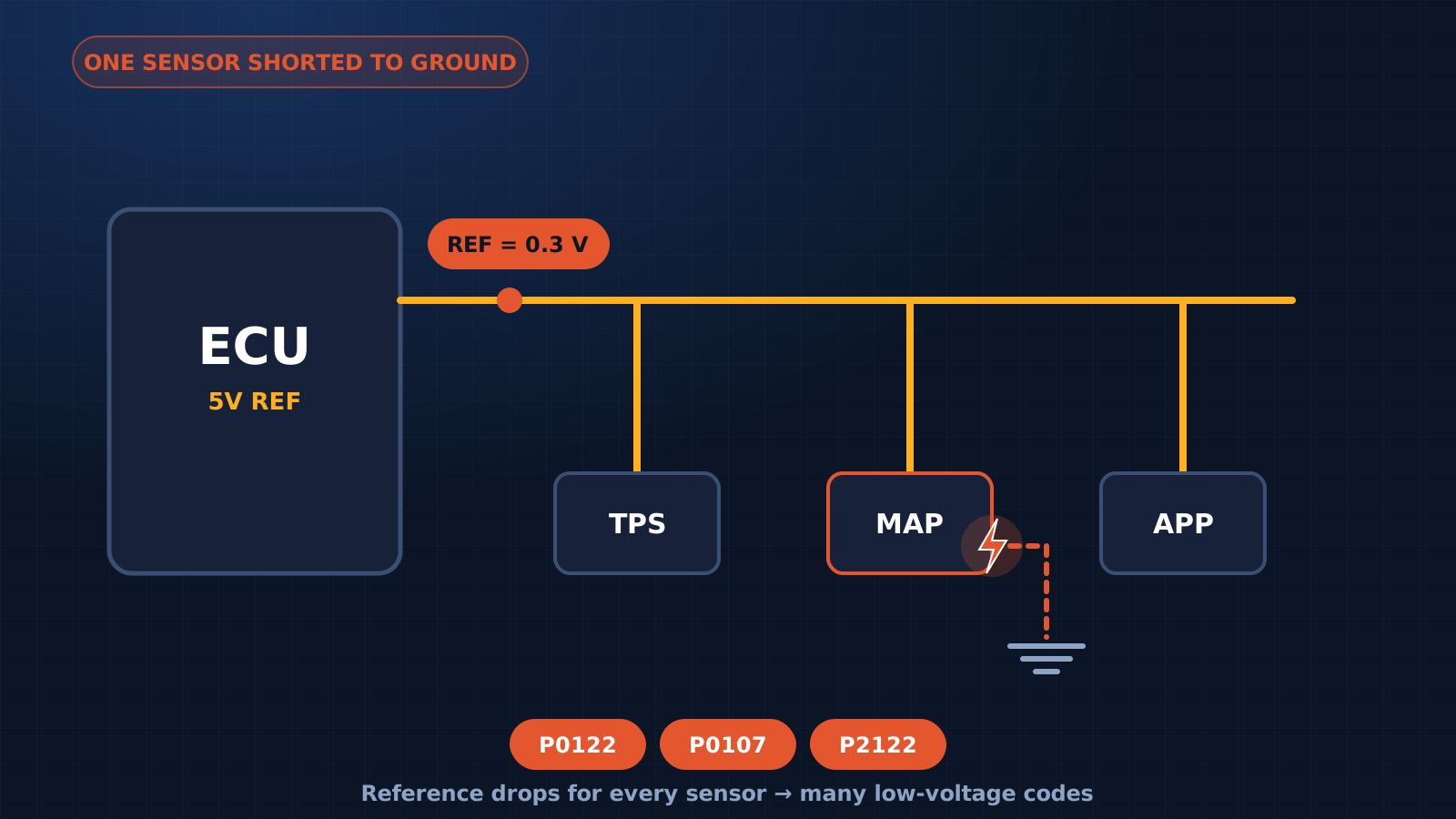
- On ECU circuits it can set “circuit high” codes and can damage the ECU driver.
Finding a short to ground
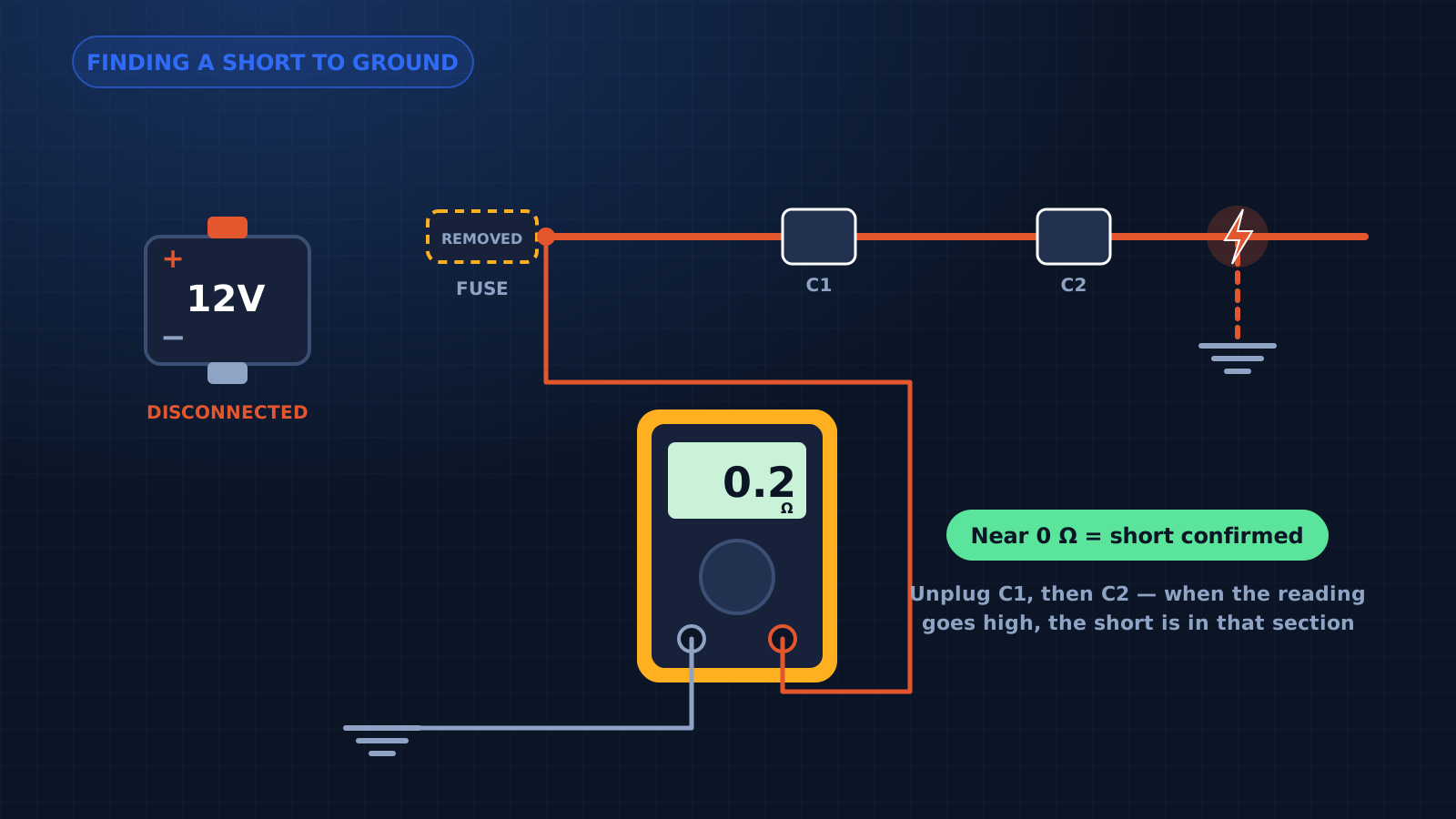
Disconnect the battery, remove the blown fuse and unplug the load. Measure resistance between the load-side terminal of the fuse and ground. A reading near 0 Ω confirms the short. Then unplug the connectors along the harness one by one; when the reading goes high, the short is in the section you just separated.
Finding a short to positive
Unplug the load and keep the switch OFF. Turn the ignition ON and measure voltage on the load wire. If you see battery voltage with the switch OFF, the wire is touching a live circuit. Follow the harness and check places where it is clamped, pinched or rubbing against other wires.
Frequently asked questions
What is the difference between a short to ground and a short to positive?
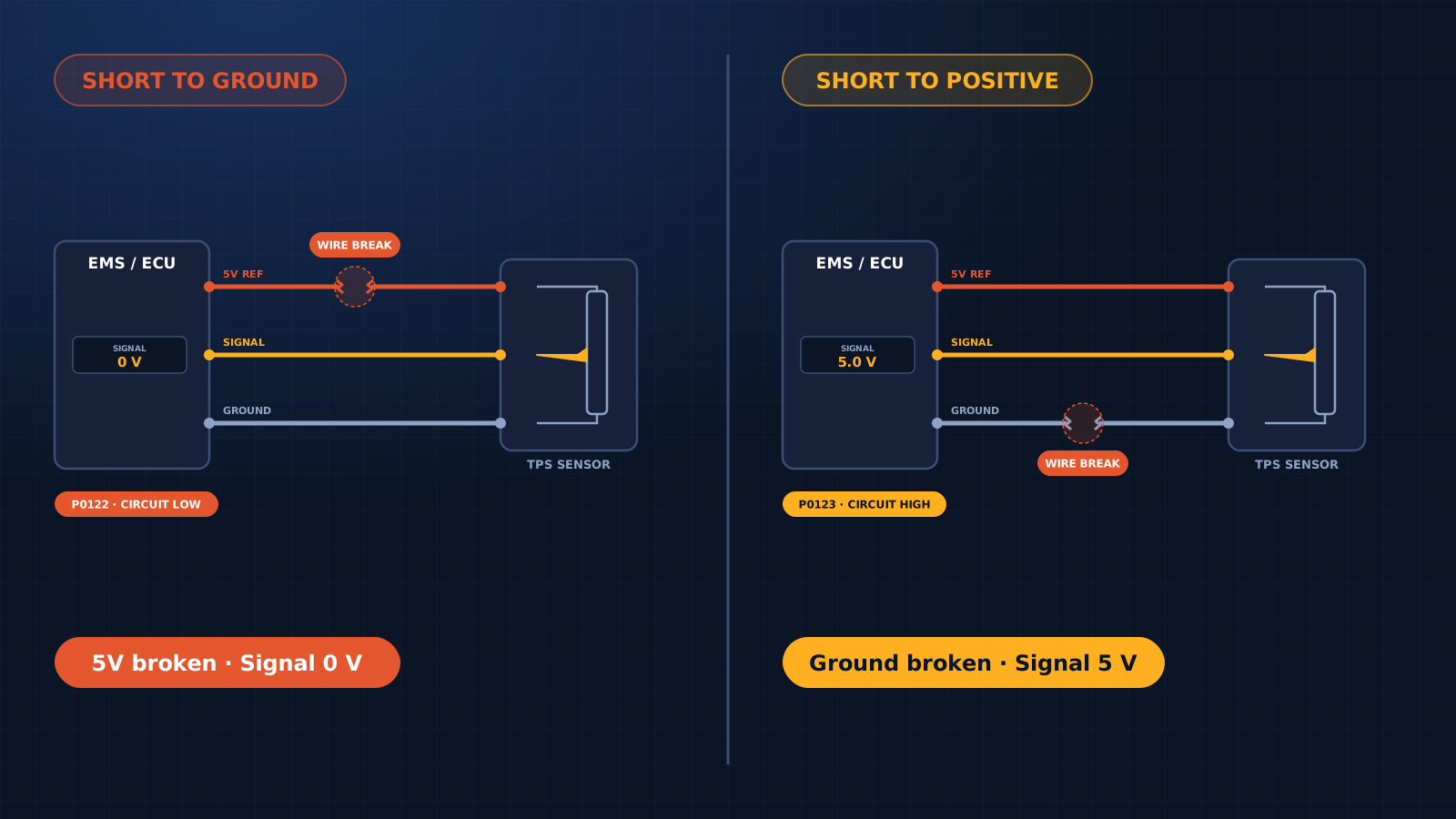
In a short to ground, a positive wire touches ground and current bypasses the load, so the fuse usually blows. In a short to positive, a wire touches another live 12 V wire, so the load or sensor signal goes high even when it should be off.
Why does the fuse keep blowing again and again?
A fuse that blows as soon as the circuit is switched on usually means a short to ground between the fuse and the load. A new fuse will not fix it; find the short first.
Which multimeter setting is used to find a short to ground?
Use the resistance (Ω) or continuity setting with the battery disconnected. A reading near 0 Ω between the circuit and ground confirms the short.
Can a short to positive damage the ECU?
Yes. If a live 12 V wire touches an ECU-controlled circuit or a 5 V sensor line, it can damage the ECU driver or the sensor supply inside the ECU.