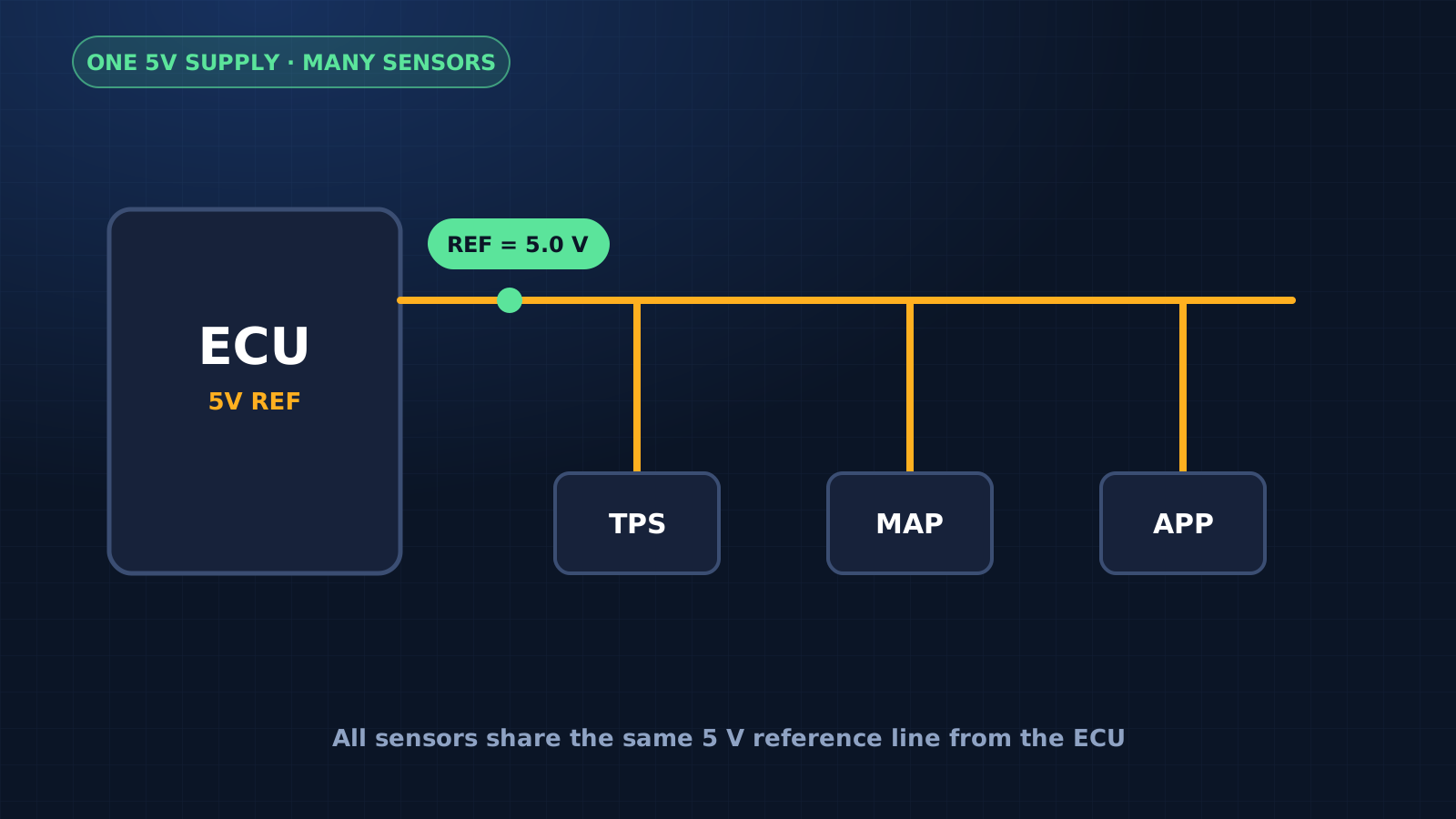
One supply, many sensors
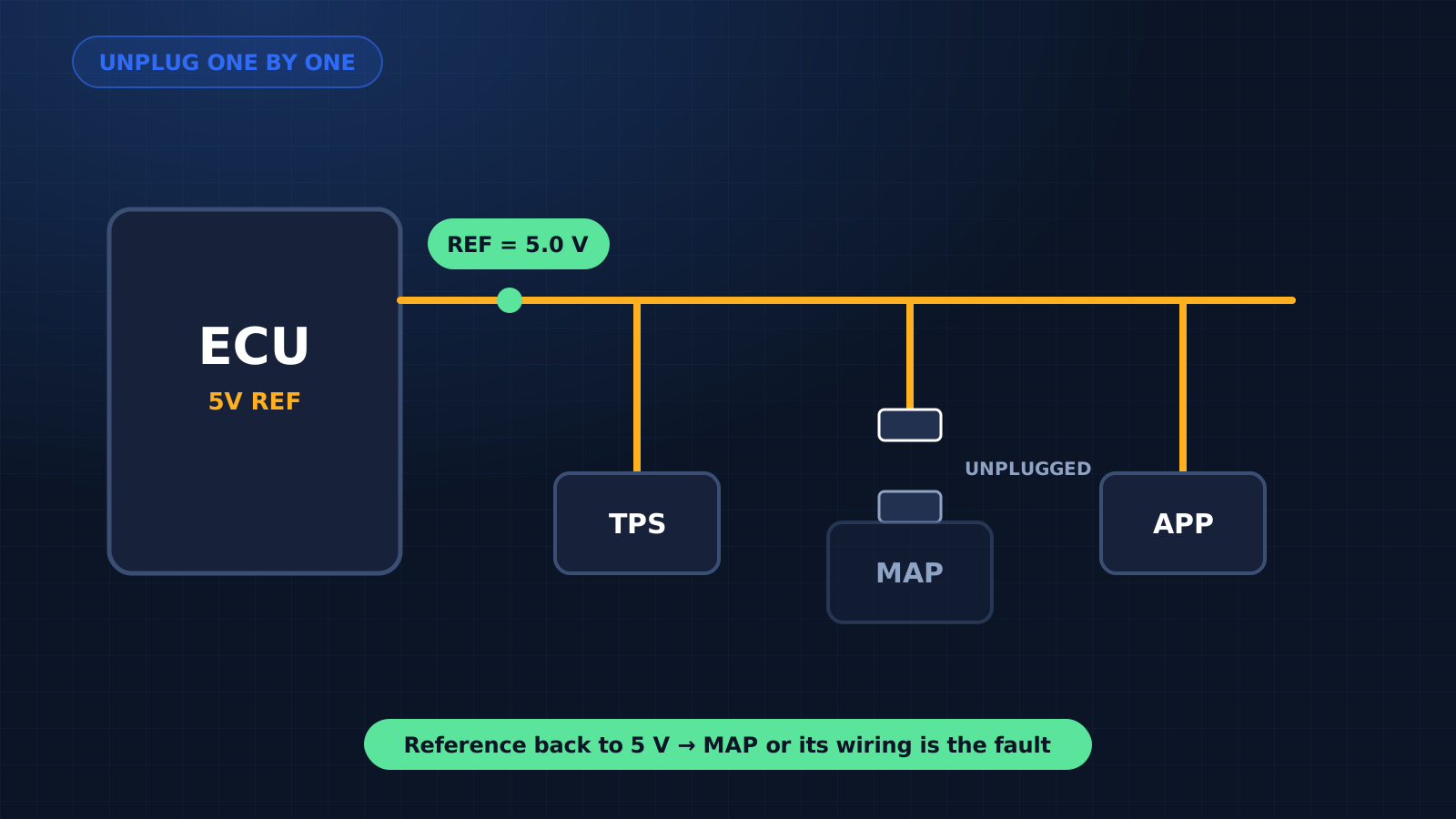
The ECU sends a regulated 5 V reference to several sensors such as TPS, MAP, accelerator pedal and rail pressure. These sensors often share the same 5 V line inside the ECU.
The symptom
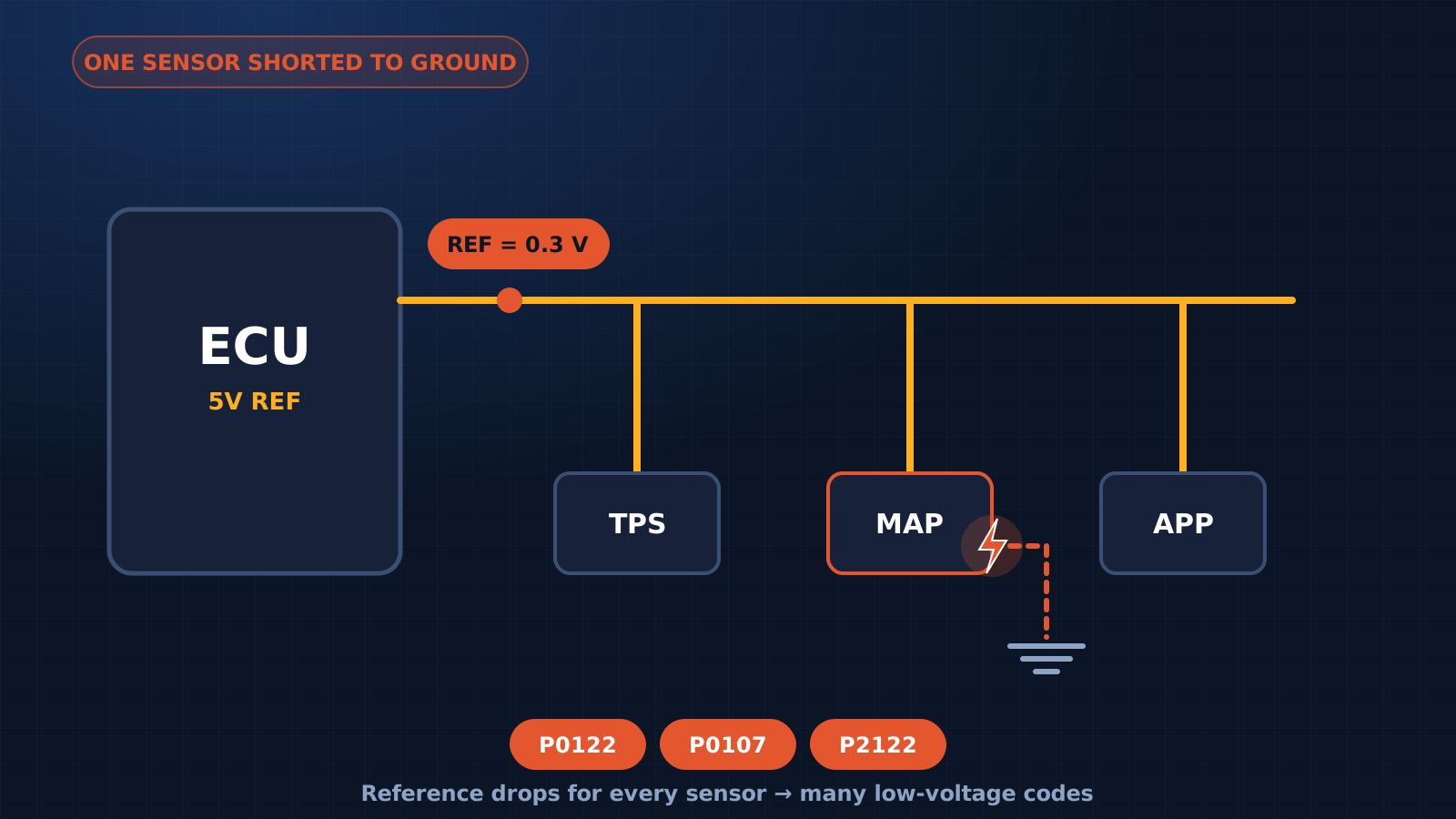
If one sensor or its wiring shorts the 5 V line to ground, the reference drops for every sensor on that line. The scanner then shows several low-voltage codes at once, and the engine may go into limp mode or not start.
Find the shorted sensor
Measure the 5 V reference at any sensor connector with ignition ON.
- If it reads near 0 V, unplug the sensors on that line one at a time.
- When the reference comes back to 5 V, the last sensor you unplugged, or its wiring, is the fault.
- If unplugging every sensor does not help, check the harness for a short before suspecting the ECU.
Frequently asked questions
Why do TPS, MAP and pedal codes appear together?
These sensors often share one 5 V reference line from the ECU. If one sensor shorts that line, all of them lose their supply and set low-voltage codes.
What should the 5V reference read?
About 5 V with ignition ON. A reading near 0 V means the line is shorted to ground or the ECU is not supplying it.
Does a 5V reference short mean the ECU is faulty?
Usually not. Unplug the sensors one by one and check the harness first. Suspect the ECU only if the reference stays low with all sensors unplugged and the harness is clear.